
Herbs
Balcony herbs that actually thrive
A rail planter can season dinner all season — if you match the herb to the pot, the sun, and how often you actually remember to water.
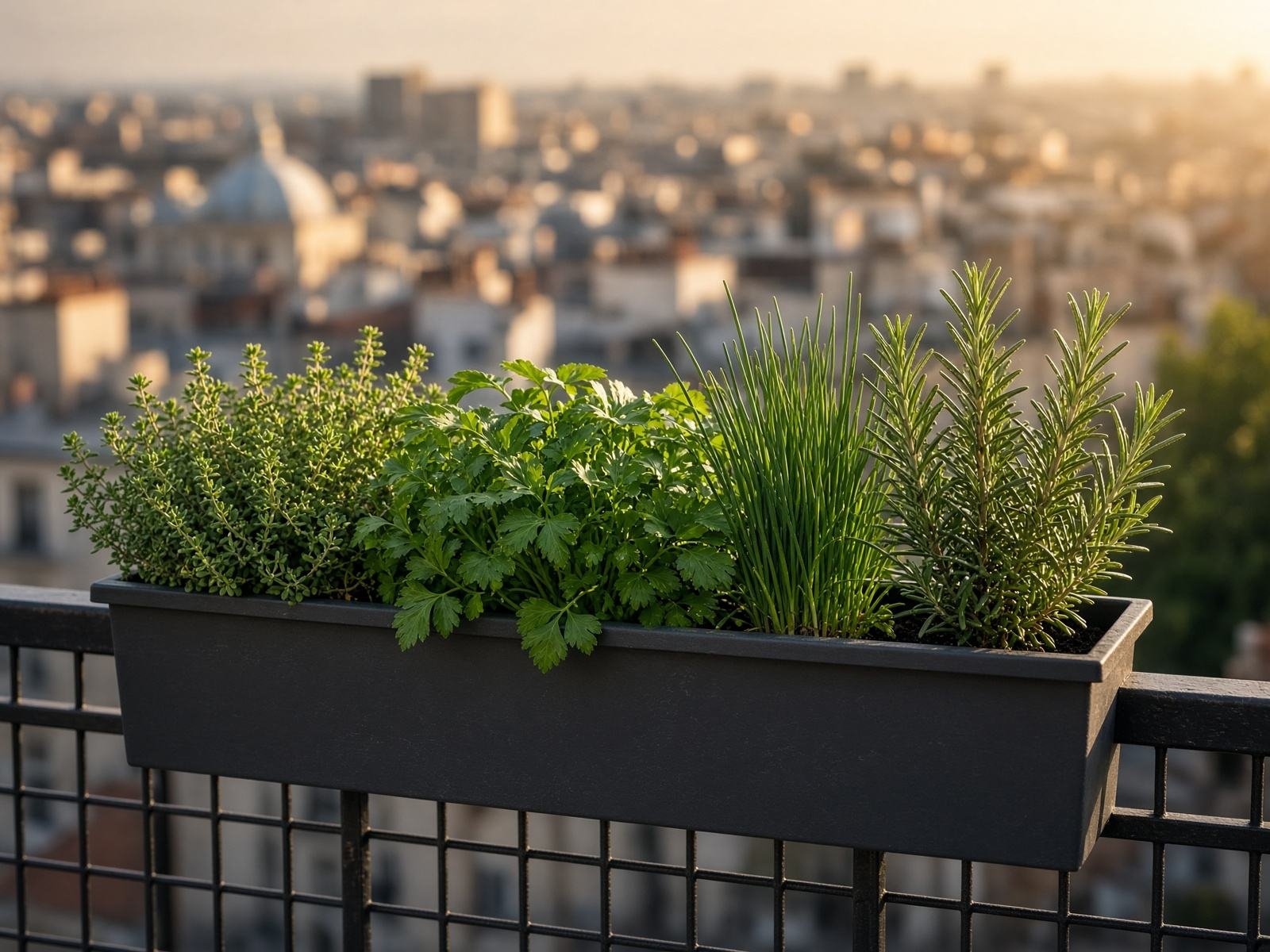
Herbs are the best first container crop because you harvest a little, often, and the plant is the point — not a single tomato in August. They still fail for ordinary reasons: a mint sharing a box with rosemary, a basil left dry on a windy rail, a window box with no holes.
Start with herbs that match your habits
If you water when you remember, choose plants from dry hillsides. If you check pots most mornings, you can grow the softer kitchen herbs too.
- Forgiving: thyme, oregano, chives, rosemary, sage. They prefer to dry slightly between waterings.
- Steady moisture: parsley, cilantro, basil, mint. They wilt theatrically when the top inch is dry, and basil may not forgive a full dry-out.
- Own pot, always: mint. It runs through a shared box and crowds everything else.
Rails, wind, and box depth
A balcony rail is hotter and windier than the same pot on the floor. Wind pulls water out of leaves and out of the sides of a thin box. Use a planter at least 6 to 8 inches deep for thyme, chives, and parsley. Rosemary and sage are happier in a deeper individual pot, 8 to 10 inches, so the roots aren’t baked against metal rail brackets.
Secure the box. A planted window box is heavier after watering than it looks, and a gust plus a loose bracket is how herbs end up on the sidewalk. Leave the nursery pots in a cache box only if you can still drain them — standing water in a sleeve is how parsley rots.
Space them before they look sparse. The spacing calculator keeps a margin at the rim so the outer thyme isn’t pressed into the wall of the box.
Soil and water, two different appetites
Use a potting mix that drains. Mediterranean herbs rot in a heavy, peat-packed mud. If your mix stays wet for days, add drainage and ease off the watering can rather than “saving” them with more water.
Basil, parsley, and cilantro want the finger test: water when the top inch is dry, and water enough that it reaches the bottom holes. Thyme, oregano, and rosemary want the opposite courtesy — a real soak, then a wait until the mix is dry a couple of inches down. A mixed box is a compromise that usually kills the drier herb first. Group them by thirst, not by how nice the labels look together.
Harvest in a way that keeps them alive
Pinch basil just above a pair of leaves so it branches instead of flowering into bitterness. If it does flower, cut the spike and keep pinching. Cut parsley and cilantro stems at the base rather than shaving the top into a sad tuft. Snip chives like grass; they come back. Take rosemary and thyme as short sprigs, not a single scalping that leaves bare wood.
Cilantro bolts when heat arrives. Sow a small new patch every few weeks in spring and again in fall, or let one plant flower for the pollinators and start another. Basil is a summer herb. Rosemary may overwinter in a pot in milder US zones if you keep it out of a freeze-dried wind; elsewhere, treat it as a season-long plant or bring it to a bright indoor sill before a hard frost.
A simple first box
For a sunny rail: thyme, chives, and parsley in a box at least 8 inches deep, with rosemary in its own pot beside it. For a hotter, more attentive routine, swap in basil and keep mint entirely separate. Feed lightly — a half-strength liquid feed every few weeks is enough for leaf herbs. They are not tomatoes.
Count the bags before you buy mix with the soil volume helper, and if you’re starting from seed this spring, drop your frost date into the seed-starting calendar. Basil waits for warmth. Parsley can go out earlier.