
Vegetables
Tomatoes in containers
A tomato in a pot can be the best plant on a patio — or a weekly disappointment. Variety, volume, and steady water decide which one you get.
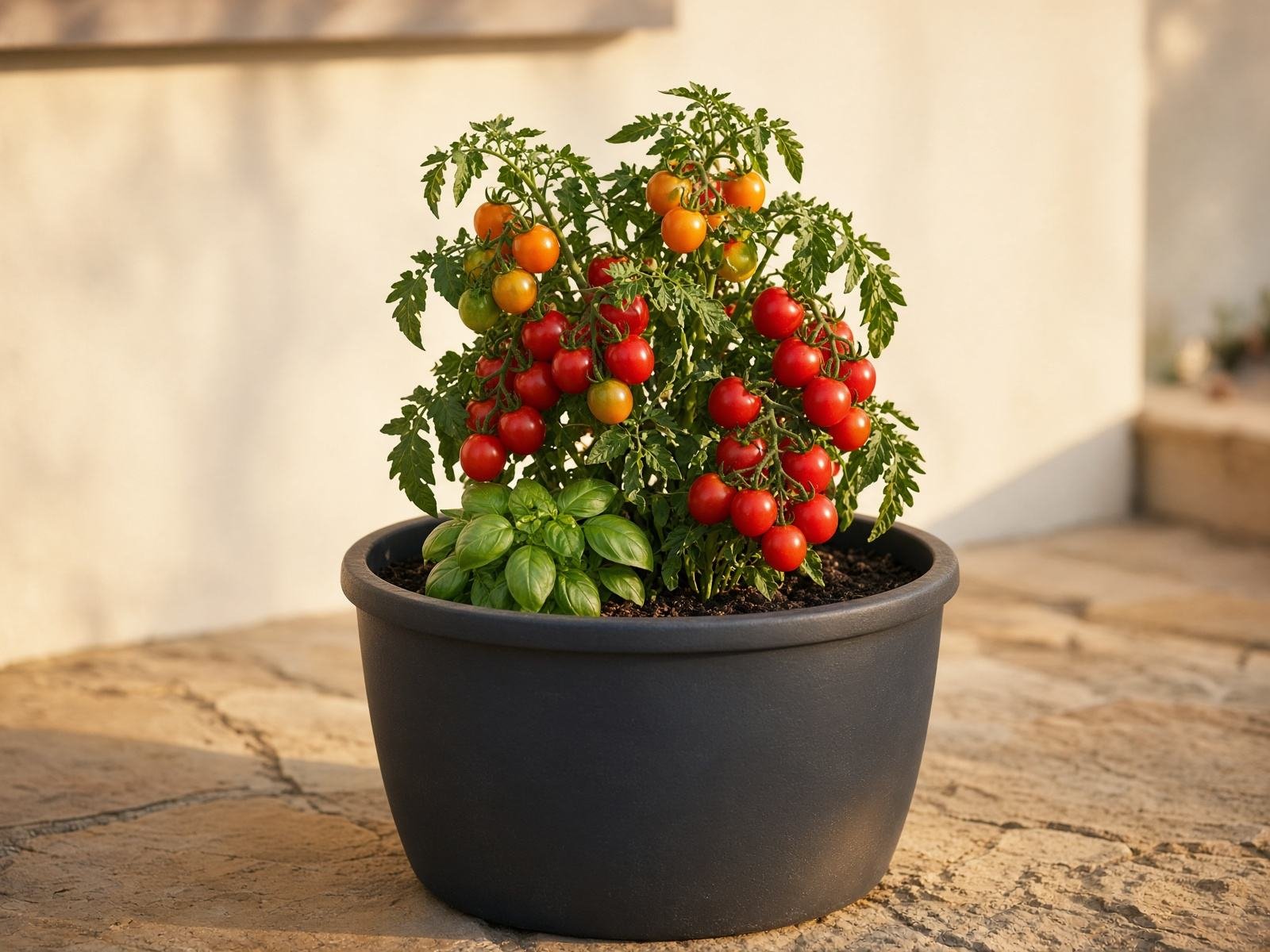
Tomatoes are hungry, thirsty, and particular about warmth. In the ground they can forgive a cramped start. In a pot they cannot. Give one plant enough soil, put the stake in on day one, and water on a rhythm instead of a panic.
Pick a plant that fits the pot
Labels matter more than the photo on the tag. Determinate and “patio” tomatoes stay shorter and finish their crop in a flush. Indeterminate types vine all season and need a bigger pot plus a tall cage or stake. Cherry tomatoes are the most forgiving first harvest; beefsteaks want more root room than most balconies can spare.
Useful starting points: Tiny Tim and Tumbling Tom for small pots and hanging baskets, Patio Princess or a bush-type early girl for a 5-gallon pot, and a cherry such as Sweet Million or Sungold if you can give the plant 10 gallons and a strong support. One plant per pot. A second seedling looks generous in May and miserable in July.
Size the container
Patio and determinate tomatoes usually do well in 5 gallons — about 12 inches across and at least 12 inches deep. Indeterminate vines prefer 10 gallons or more. Fabric grow bags and thick plastic both work. Dark pots heat the root zone, which tomatoes like until a heat wave, when a light-colored pot or a bit of afternoon shade keeps the mix from cooking.
Drainage holes are not optional. Set the pot where you can reach it with a hose or watering can without lifting it later. A full 10-gallon planter is not a thing you want to shuffle across a balcony.
If the spacing calculator says one tomato, believe it. These plants are not a grid crop.
Plant deep, and support immediately
Use potting mix, not garden soil. Tomatoes can be buried deeper than they sat in the nursery pot; roots form along the buried stem, and a stockier plant stands up to wind. Leave an inch of room at the rim for watering. The soil volume helper tells you how many bags that pot actually needs.
Push the stake or cage in at planting. A plant that flops once will kink, and you’ll be stabbing roots to fix it. Tie loosely with soft tape as the stem thickens. On a windy rail, a heavy pot plus a cage anchored in the mix beats a decorative trellis that lifts out.
Water on a rhythm
Uneven water is the usual reason container tomatoes crack, drop flowers, or develop blossom-end rot — that dark, sunken patch on the bottom of the fruit. It is a uptake problem, most often from a pot that swung from soaked to bone dry, not a sign you need a special spray.
Check the mix an inch or two down. When it’s dry there, water until it runs from the drainage holes. In hot weather a 5-gallon pot may need this every day. A mulch of clean straw or shredded leaves slows evaporation. Empty saucers after storms so the pot isn’t standing in a warm bath.
Feed fruiting plants, not just leaves
Mix a slow-release fertilizer into the pot at planting, then begin a diluted liquid feed every one to two weeks once flowers appear. Follow the label. Extra nitrogen makes a beautiful plant and few tomatoes. If leaf edges burn after a feeding, flush with plain water and skip the next round.
Pinch suckers on indeterminate vines if the plant is swallowing the patio — the shoots that appear in the crotch between stem and leaf. Determinates don’t need that haircut. Harvest fruit as it colors. Leaving ripe clusters on the vine slows the next set.
Sun, timing, and when to quit
Tomatoes want 6 to 8 hours of direct sun and nights that stay above about 50°F. Start seeds indoors 6 to 8 weeks before your last frost and transplant a week or two after it, using the seed-starting calendar with your own frost date. Hardened-off plants — set outside for a few hours more each day — sulk less than seedlings that go from a windowsill to a full west exposure overnight.
When nights turn cold in fall, pick remaining fruit and let it ripen indoors. Don’t try to overwinter a tired vine in a small pot. Compost the plant, refresh the mix, and plan the next season’s single, well-supported tomato.