
Beginner guide
Container gardening for beginners
You don’t need a yard to grow well. With the right pots, soil, and a realistic plan for sun and water, a balcony or patio can produce herbs, greens, and summer vegetables.
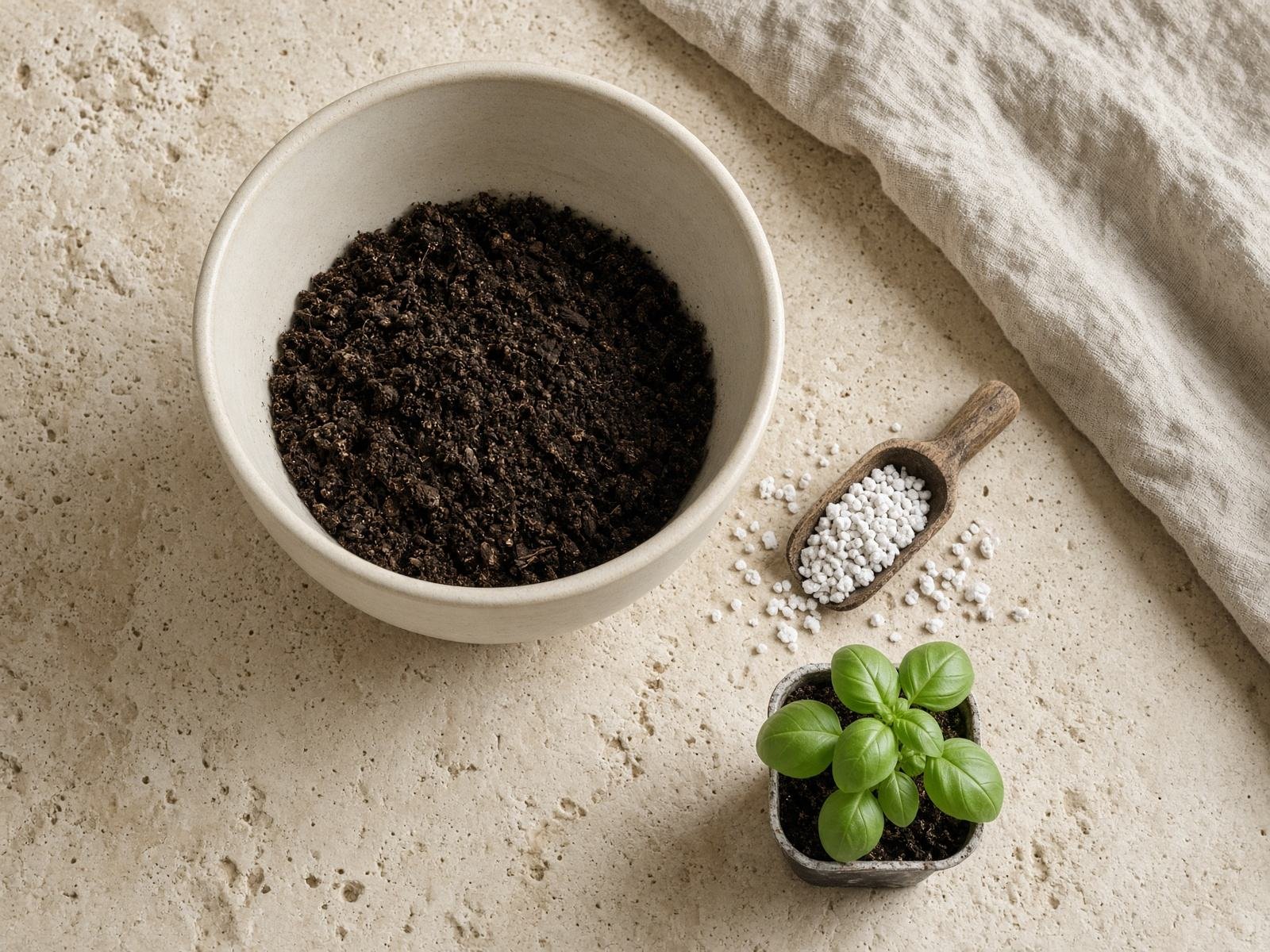
Container gardening is simply growing plants in pots, troughs, grow bags, or other vessels instead of in the ground. For apartment dwellers and anyone with a small patio, it’s often the only practical way to garden — and it has real advantages: you control the soil, you can move plants to chase sun or shelter, and you start small without committing an entire bed.
This guide walks through what matters most when you’re starting: choosing containers, filling them with the right mix, watering and feeding without drama, reading your light, picking forgiving first crops, and avoiding the mistakes that frustrate new growers. Use it as a checklist, then refine with the Plant Spacing Calculator when you’re ready to plant.
Choose pots that drain and fit the crop
Every container needs drainage holes. Without them, roots sit in water after a rain or a heavy watering and quickly decline. If you fall in love with a cachepot that has no holes, keep the plant in a nursery pot inside it and empty standing water after you water.
Size matters more than material. Shallow herbs and lettuce can thrive in 6–8 inch deep boxes; tomatoes, peppers, and cucumbers want 12–18 inches of depth and a pot that holds at least 5 gallons (often more for indeterminate tomatoes). Bigger pots dry out slower, which is kinder on hot balconies.
Plastic, fabric grow bags, glazed ceramic, and wood planters all work. Dark plastic heats up in full sun — fine for heat-loving crops, harder on cool-season greens. Fabric bags breathe and are light to move, but they dry faster than solid plastic. Match the pot to how often you can water.
When in doubt, size up. Crowded roots and tiny pots are the most common beginner frustration.
Use potting mix, not garden soil
Garden soil and cheap topsoil compact in containers. They hold water unevenly and starve roots of air. Buy a bag labeled potting mix or container mix — typically a blend of peat or coconut coir, perlite or pumice, and composted bark.
Fill pots nearly to the rim, leaving a half-inch to an inch for watering so mix doesn’t float over the edge. Moisten the mix before planting; bone-dry peat-based mixes can shed water until they’re thoroughly wetted.
Refresh mix each season for hungry crops, or replace the top third and loosen the rest for lighter herbs. Don’t reuse mix that stayed soggy all winter without checking for odor or compaction. If you want a bag count before you shop, use the soil volume helper.
Water thoroughly, then let the top dry a little
Containers dry from the outside in and from the top down. Stick a finger an inch or two into the mix. If it feels dry at that depth, water until moisture runs from the drainage holes. That flush helps prevent salt buildup from fertilizer.
Frequency depends on pot size, weather, and plant size. A small herb pot on a windy 90°F balcony may need water daily; a large tomato planter in mild weather might go two or three days. Morning watering reduces leaf wetness overnight and gives plants a reserve for the heat of the day.
Self-watering planters and saucers can help if you’ll be away, but empty saucers after heavy rain so pots aren’t sitting in a puddle for days.
Feed lightly and regularly
Potting mix alone doesn’t feed plants for a full season. A slow-release fertilizer mixed in at planting covers a lot of beginners’ needs. Many growers also use a diluted liquid fertilizer every one to two weeks during active growth, especially for fruiting crops like tomatoes and peppers.
Follow label rates — more fertilizer does not mean more harvest, and overfeeding can burn roots or push soft leafy growth. Leafy greens and herbs often need less than heavy fruiters. If leaf edges brown after feeding, flush the pot with plain water and ease off next time.
Match plants to your sunlight
Sunlight is the filter that decides what succeeds. Watch your space for a few days before you buy a cart of seedlings. Morning sun is gentler; harsh west sun on a reflective wall can cook pots. If light is marginal, choose compact varieties and prioritize herbs and greens before attempting large fruiting plants.
- 6+ hours of direct sun: tomatoes, peppers, cucumbers, most fruiting crops, basil, rosemary
- 3–6 hours: leaf lettuce, spinach, kale, parsley, cilantro, mint, many flowers
- Less than 3 hours: shade-tolerant foliage; edible harvests will be limited
First plants to try
Start with crops that forgive imperfect watering and still reward you quickly. Check spacing before you plant. Overcrowding looks lush for two weeks, then invites disease and weak growth. The spacing calculator estimates how many plants fit once you leave a small margin from the pot rim.
- Leaf lettuce and salad greens — fast, shallow-rooted, happy in partial sun.
- Radishes — ready in about a month; great for learning spacing.
- Basil and parsley — useful in the kitchen; pinch tips to keep plants bushy.
- Bush beans — productive in a medium pot with decent sun.
- Cherry or patio tomatoes — choose determinate or patio-labeled types and stake them early.
- Marigolds or petunias — they teach container rhythm without harvest pressure.
Common mistakes, and easy fixes
Most early failures come from the same short list. Fix the setup before you blame the plant.
- No drainage: drill holes or double-pot. Never leave roots in standing water.
- Pots too small: upsize. Roots need volume, and moisture stays more stable.
- Garden soil in pots: switch to potting mix.
- Planting too close: follow seed-packet spacing and thin seedlings early.
- Ignoring light: move pots or change crops to match reality.
- Inconsistent water: check soil with your finger, not the calendar alone.
- Skipping support: stake tomatoes and cucumbers when you transplant, not after they flop.
How often should I water container plants?
There is no universal schedule. Check soil moisture and how the plant looks. Slight midday wilt that recovers by evening can be normal heat stress. Wilt that doesn’t recover, or crispy leaf edges, usually means the pot dried too far. In summer heat, many small containers need daily water. Larger pots and cooler weather need less. When you water, soak thoroughly rather than sipping a little every hour.
What size pot do tomatoes need?
Patio and determinate tomatoes often do well in 5-gallon pots, roughly 12 inches across and deep. Indeterminate vines prefer 10 gallons or more and strong support. One vigorous plant per pot is usually smarter than cramming three into a tight container. The full walkthrough is in tomatoes in containers.
Can I grow vegetables on a north-facing balcony?
You can grow some leafy greens and herbs if there is bright open sky, but fruiting crops will struggle without several hours of direct sun. Treat a shady balcony as a foliage and cool-season greens space, or use the brightest corner you have. Managing expectations beats fighting the light.
Do I need to fertilize if I used fresh potting mix?
Fresh mix may include a starter charge of nutrients, but most mixes don’t feed for an entire season. Plan on supplemental fertilizer after the first few weeks of active growth, especially for tomatoes, peppers, and cucumbers. Herbs grown for leaves often need less.
When should I start?
In most of the US, cool-season greens go out in early spring once nights are mild. Heat-loving crops wait until after your last frost, when nights stay reliably above about 50°F. Fall is excellent for another round of lettuce and herbs in many regions. The seed-starting calendar turns your frost date into a simple schedule.
Pick one sunny spot, one quality potting mix, and two forgiving plants. Then space the planting so the first pot isn’t overcrowded.